
The short version
- Most fast "comebacks" have a few causes: growth that was blasted off instead of broken down, a solution rinsed before it worked, missed areas and uneven rinsing.
- A cheaper wash isn't the cause; time is. A low quote isn't proof of a bad job, and a high one isn't proof of a good one.
- No wash lasts forever on the humid Gulf Coast. The goal is a clean that lasts as long as the conditions allow.
1. The growth was blasted off, not broken down
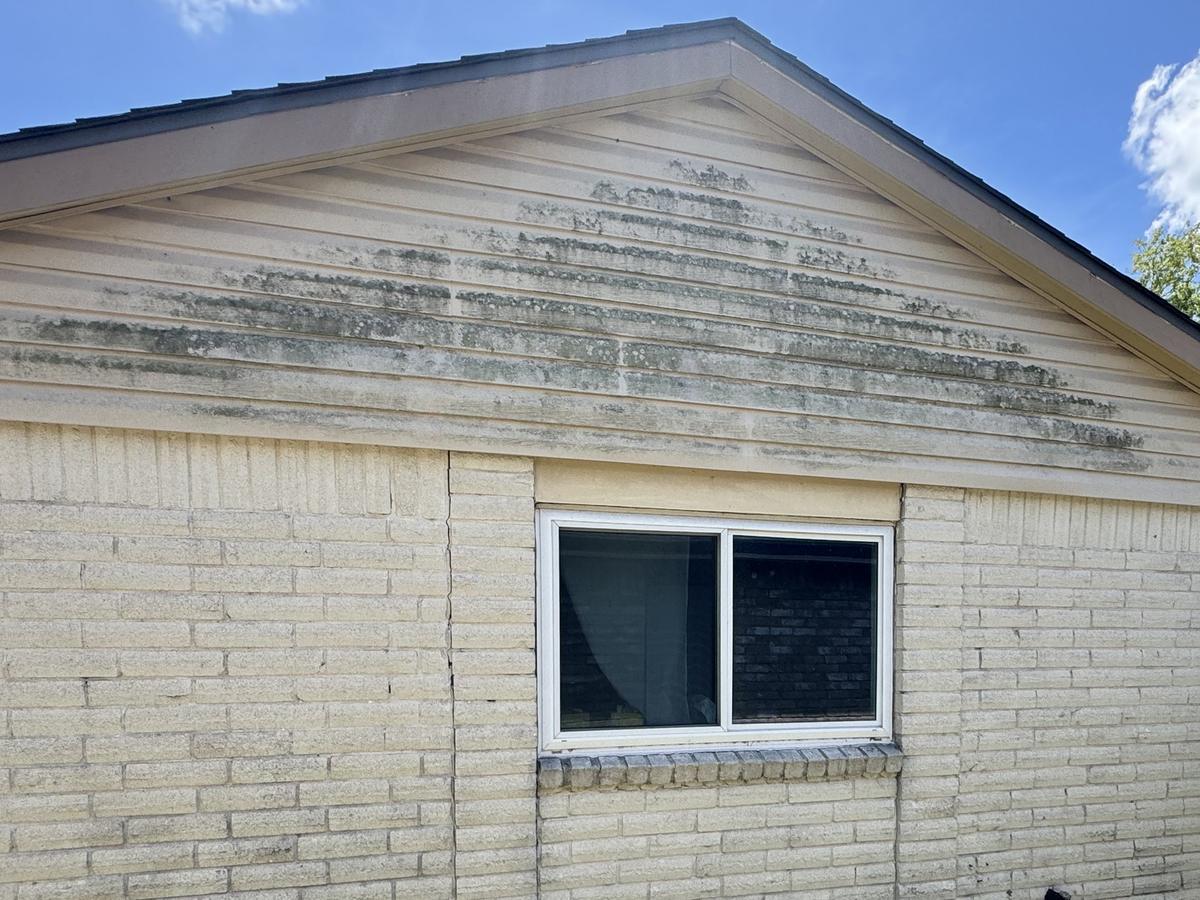
The dark film on siding, fences and concrete is often living growth like mildew, algae or lichen, not just dirt. Mildew is a fungus whose thread-like hyphae branch across and into the surface (Cornell). High pressure removes what's on top, but growth left in the texture, with the same moisture, comes back. The USDA Forest Service says mildew can be removed with a cleaner, but will return if the growth conditions remain the same (USDA Forest Service). That's the full story in why mildew grows back.
2. The solution didn't get time to work
Even with the right solution, rinsing too soon cuts the chemistry short. The Forest Service's mildew-cleaning method lets the solution sit for 10 to 15 minutes and warns that skipping that set time may result in an inadequate job (USDA Forest Service). ARMA's roof guidance uses a 15 to 20 minute dwell (ARMA). On a tight schedule, this is the step that gets squeezed. See what dwell time means.
3. Bleach and water, no soap
A solution without a surfactant can lighten the growth and still leave the dirt film behind, so the wall looks dull again as soon as it dries. More in why bleach alone doesn't clean.
4. Missed areas
Gables, eaves, the tops of walls and shady corners are harder to reach, so they're the easiest to skip. Georgia-Pacific points out that areas under eaves, porches and other overhangs get little natural rinsing from rain and need particular attention (Georgia-Pacific). Growth left there stays visible, and roof algae spores travel easily on wind and animals (ARMA).
5. A quick or uneven rinse
Rinsing is where the loosened grime actually leaves. The Brick Industry Association calls a thorough and uniform rinse "critical," and says failing to completely flush the solution and dissolved matter can leave a "white scum" (BIA). Georgia-Pacific recommends washing siding from the bottom up and finishing with a clear-water rinse to minimize streaking (Georgia-Pacific).
6. Concrete cleaned with a wand alone
On a driveway, a wand swept by hand leaves light and dark bands that read as "still dirty." A surface cleaner holds the nozzles at a fixed distance for an even pattern (Mi-T-M). See tiger striping and surface cleaner vs wand.
The fair part: even good washes come back eventually
It's worth being honest about this. ARMA says roof cleaning is only temporary and the discoloration may recur (ARMA), and the same is true of siding. Shade, sprinklers, gutters and humidity all decide how fast growth returns. A thorough job doesn't change the climate; it removes what's there as completely as the surface allows.
Some things also look like a failed wash but aren't. Old oil and rust stains on concrete are different problems from dirt, and sun-grayed wood is weathering, not mildew. See concrete stains and wood fence: weathering vs mildew.
Fair questions to ask any company
- What method do you use on my siding, and on my roof? (Shingle roofs should never be pressure washed; here's why.)
- Do you use a cleaning solution, and how long does it stay on before the rinse?
- Is the whole house included, including gables and eaves?
- Do you use a surface cleaner on driveways?
- How do you protect plants, pets and windows?
Any good company should be glad to answer. We are.
How ACE approaches it
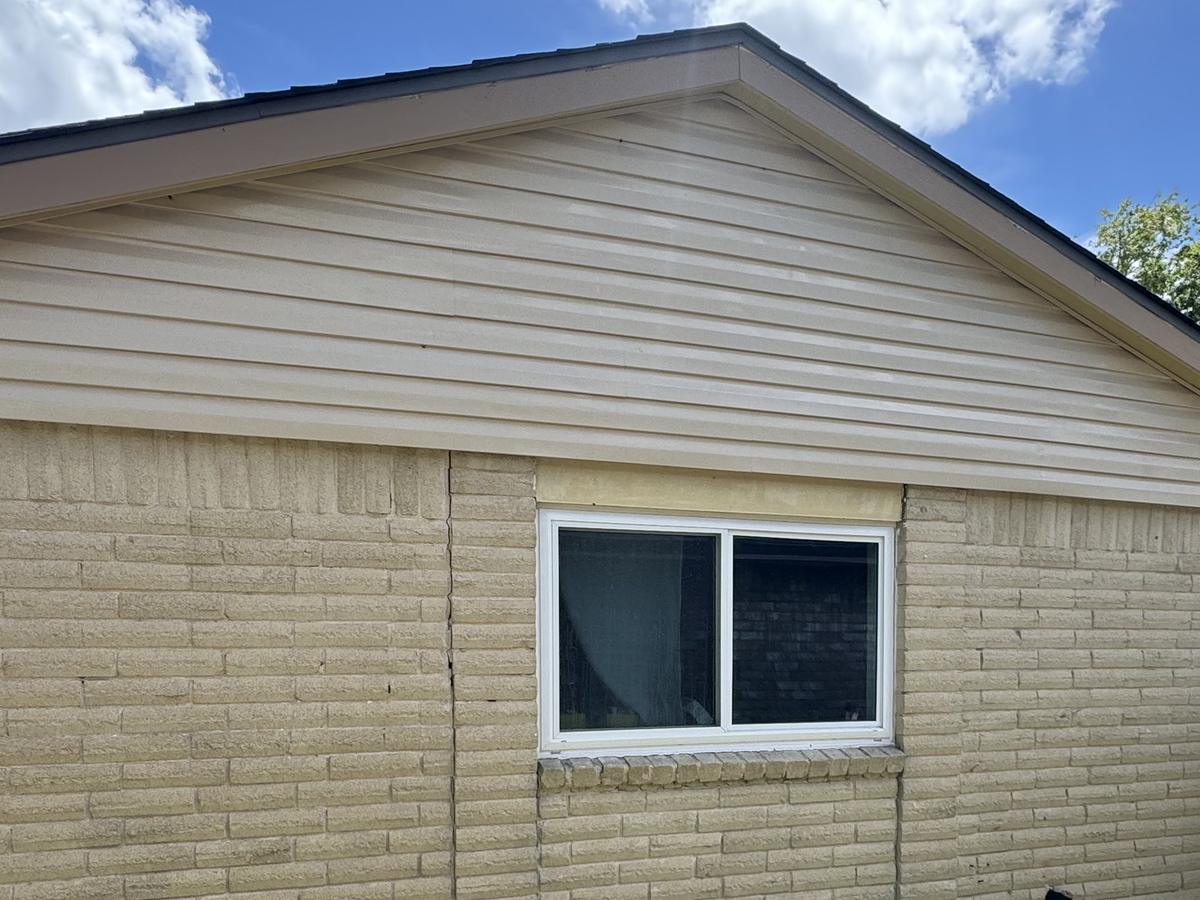
We soft wash siding and shingle roofs with a cleaning solution and a gentle rinse, and clean concrete with a 20-inch surface cleaner on a 3,000 PSI, 5.5 GPM machine. Every job gets a free quote, no obligation, and we'll be straight with you about what a wash can and can't do for your surfaces.
Quick answers
Why does my house look dirty again so soon after a wash?
Usually because of how it was washed: growth blasted off instead of broken down, a cleaning solution rinsed before it had time to work, missed areas like gables and eaves, or a quick, uneven rinse. Mildew left in the surface returns when the conditions stay the same.
Does a cheaper wash mean a worse wash?
Not necessarily. A low quote isn't proof of a bad job, and a high one isn't proof of a good one. What matters is the method and the time spent on each step, so ask how the job will be done.
How long should a house wash last?
It depends on shade, moisture and climate. Fungal spores are always in the air, and ARMA notes that roof cleaning is only temporary. Sunny, dry walls stay clean longer than shady, damp ones.
What should I ask before hiring a pressure washing company?
Ask what method they use on each surface, whether they use a cleaning solution and how long it stays on, whether gables and eaves are included, whether they use a surface cleaner on concrete and how they protect plants, pets and windows.
Sources
- Mildew and Mildew Control for Wood Surfaces, USDA Forest Service. https://research.fs.usda.gov/download/treesearch/5675.pdf
- Mold Information Sheet, Cornell Cooperative Extension. https://ccetompkins.org/resources/mold-fact-sheet
- Algae Discoloration of Roofs, Asphalt Roofing Manufacturers Association (ARMA). https://www.asphaltroofing.org/algae-discoloration-of-roofs/
- Algae & Moss Prevention and Cleaning for Asphalt Roofing Systems, Asphalt Roofing Manufacturers Association (ARMA). https://www.asphaltroofing.org/algae-moss-prevention-cleaning-asphalt-roofing-systems/
- Technical Note 20: Cleaning Brickwork, Brick Industry Association. https://www.gobrick.com/media/file/20-cleaning-brickwork.pdf
- Care and Maintenance, Georgia-Pacific Vinyl Siding. https://www.gpvinylsiding.com/support/care-and-maintenance/
- Pressure Washer FAQ: PSI vs GPM, hot vs cold water, rotary surface cleaners, Mi-T-M Corporation. https://www.mitm.com/consumer/pressure-washers/
Links checked October 19, 2026. This page is general information, not a substitute for your manufacturer's instructions or a product label.