
The short version
- For siding in humid areas, most guidance falls between every 6 and 12 months.
- Shaded walls, walls behind shrubs and north-facing sides usually need it first.
- Let the house's condition, not the calendar, make the final call.
What the sources say
James Hardie, one of the largest siding makers, suggests cleaning its siding once or twice a year, or every 6 to 12 months, using a garden hose and a soft brush rather than a high-pressure washer (James Hardie). Better Homes & Gardens says most homeowners should clean their house about once a year on average, and quotes an expert who recommends every six to twelve months for homes in humid regions where mold, mildew and algae thrive (Better Homes & Gardens).
That's a range, not a rule. A sunny, open lot may go a year or more. A house under big oaks with a shady north wall may show green or black spots well before that.
Why humid climates need it more often
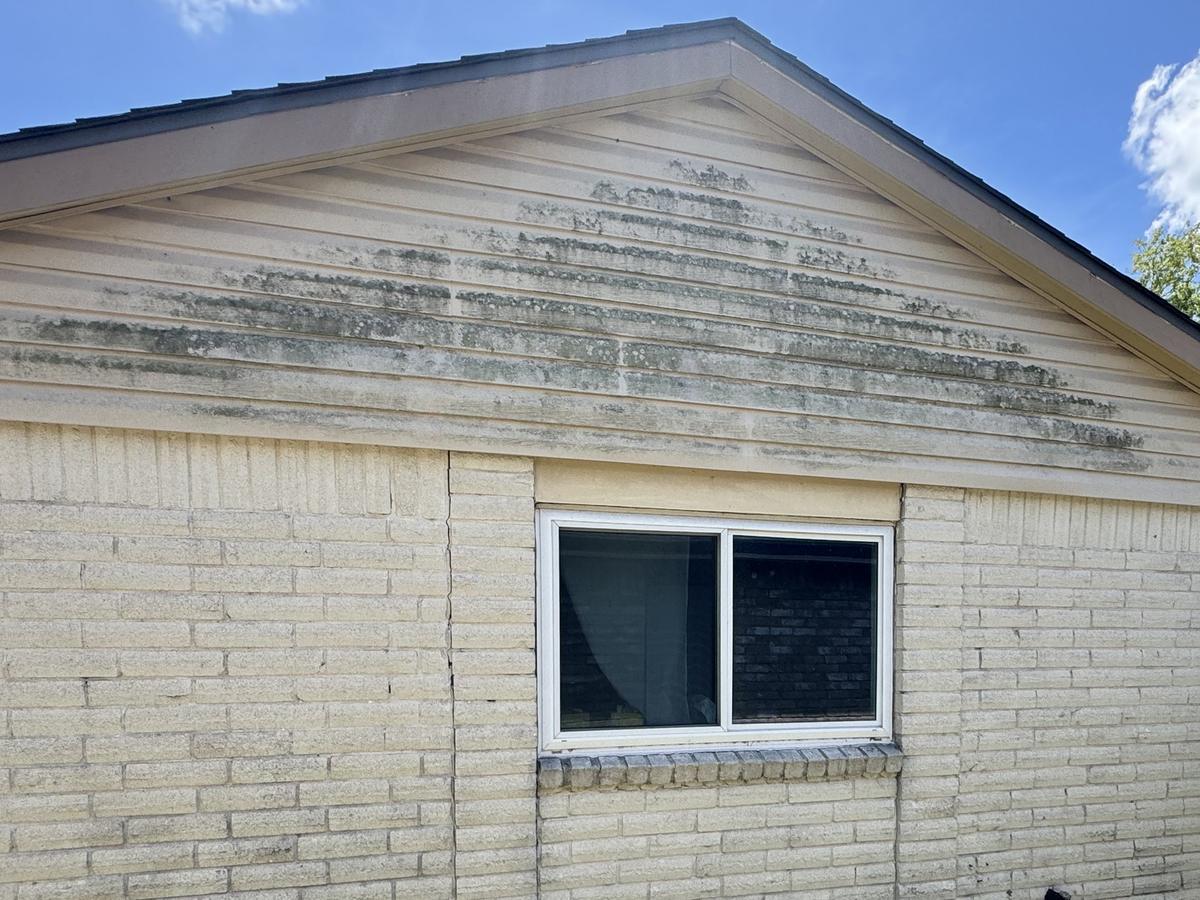
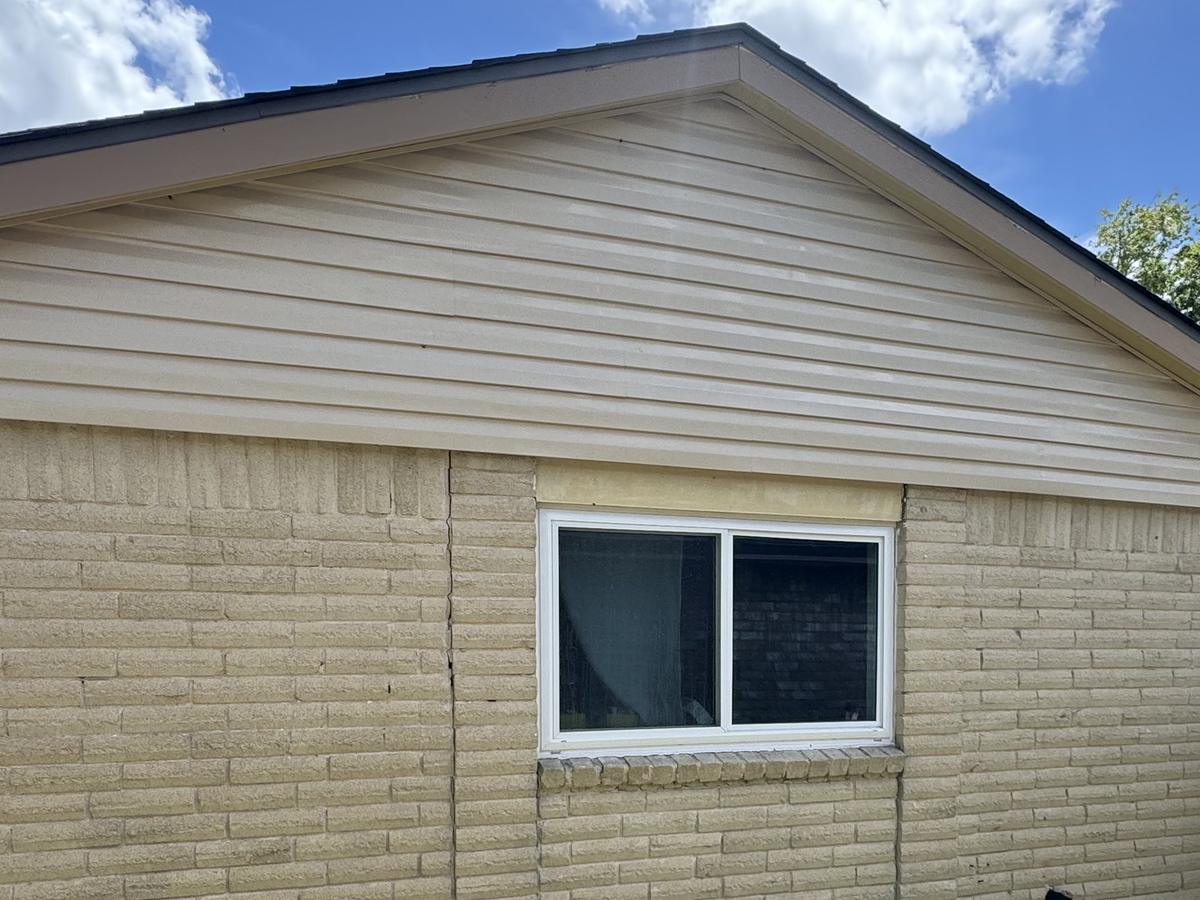
Mildew is a form of stain fungus, and the U.S. Forest Products Laboratory notes that mildew fungi grow most extensively in warm, humid climates. It grows on both sunny and shaded sides of buildings, but especially on walls behind trees or shrubs where air can't move freely (Forest Products Laboratory). Purdue Extension adds that mildew often follows the dew pattern of a house: eaves and the ceilings of porches and carports cool quickly, collect dew and stay damp (Purdue Extension).
The same climate drives roof algae. The roofing industry says algae discoloration is most widespread in the Gulf States (ARMA).
Surface by surface
| Surface | Typical guidance | Signs it's time |
|---|---|---|
| Siding (vinyl, fiber cement, painted) | Every 6–12 months in humid areas (James Hardie, BH&G). Check your siding maker's care guide. | Green film, black spots, gray haze under eaves, dirty streaks below windows |
| Shingle roof | When streaks appear. Cleaning is temporary, and streaks may come back (ARMA). | Dark streaks running down the slope; moss on shaded planes |
| Driveway, walks, patio | As needed. Shaded and damp areas go first. | Dark or green patches, slick spots, visible wheel tracks |
| Wood fence or deck | As needed, and before re-staining. | Black blotches, overall gray, green on the shady side |
Not sure whether you're looking at mildew or dirt? The Forest Products Laboratory describes a simple test using a drop of household bleach. See how to tell weathering from mildew.
When's the best time of year?
Better Homes & Gardens names spring as the best time in most climates (Better Homes & Gardens). Locally there's a wrinkle: the Houston Health Department notes that tree pollen is most active in the spring (Houston Health Department). If the yellow film is what bothers you most, washing after the heaviest pollen has passed keeps the results looking good for longer.
Summer works too, with one caution. Manufacturers warn not to let cleaning solutions dry on the surface (James Hardie), and that's harder in full afternoon sun. Morning or shaded work helps.
Why waiting too long costs more
Waiting until you repaint or re-stain doesn't solve it. A USDA Forest Service guide warns that mildew left under a new finish will appear again on the new surface and can hurt how well the new coat sticks (USDA Forest Service). Cleaning on a regular schedule also means less buildup each time, so there's no temptation to reach for more pressure. As Consumer Reports notes, too much pressure can damage paint and wood.
Got an HOA notice about mildew?
Many neighborhoods have exterior-appearance rules. If you get a letter:
- Read it closely. Note which areas are named (siding, roof, driveway, fence) and the deadline.
- Check your HOA's written rules so you know what's actually required. If something is unclear, ask the HOA directly. We can't advise on HOA rules.
- Take dated before and after photos and keep your receipt, in case anyone asks for proof.
- Ask for the right method. Siding and roofs call for a low-pressure soft wash, not high pressure. See soft wash vs pressure wash.
How ACE fits in
We soft wash siding and shingle roofs at low pressure with an X-Jet soft wash system, and clean driveways and sidewalks with a 3,000 PSI, 5.5 GPM pressure washer and a 20-inch surface cleaner. We're happy to tell you honestly if your house can wait.
Quick answers
How often should I wash my house in a humid climate?
Most guidance falls between every 6 and 12 months for humid areas. James Hardie suggests cleaning its siding once or twice a year, and Better Homes & Gardens quotes an expert recommending every six to twelve months in humid regions. Shaded walls may need it sooner.
What is the best time of year to wash a house?
Spring is a common choice. In the Houston area tree pollen is most active in spring, so if pollen film bothers you, washing after the heaviest pollen has passed keeps the results looking good for longer.
Why does the shady side of my house turn green first?
Mildew and algae need moisture. Walls that get little sun or sit behind shrubs and trees stay damp longer and have less air movement, which is where mildew grows most.
How do I know if it's mildew or just dirt?
The Forest Products Laboratory describes a simple test for painted surfaces: put a drop or two of fresh household bleach on a small spot. Mildew usually lightens within a minute or two; dirt doesn't. Wear eye protection and test somewhere out of sight.
My HOA sent a mildew notice. What should I do?
Read the notice for the exact areas and deadline, check your HOA's written rules, and keep dated before and after photos once the work is done. Ask the HOA directly if anything in the notice is unclear.
Sources
- Tips for Cleaning Your Siding, James Hardie. https://www.jameshardie.com/blog/siding-durability/tips-for-cleaning-your-siding/
- How Often to Pressure Wash Your House, Better Homes & Gardens. https://www.bhg.com/how-often-to-pressure-wash-house-11702077
- Wood Finishing: Mildew on House Paints (Research Note FPL-0128), USDA Forest Service, Forest Products Laboratory. https://www.fpl.fs.usda.gov/documnts/fplrn/fplrn128.pdf
- Wood Finishes and Mildew (NCR-134), Purdue University Extension. https://www.extension.purdue.edu/extmedia/NCR/NCR-134.html
- Algae Discoloration of Roofs, Asphalt Roofing Manufacturers Association (ARMA). https://www.asphaltroofing.org/algae-discoloration-of-roofs/
- Houston HealthScope, March 27, 2026: daily pollen monitoring, Houston Health Department. https://www.houstonhealth.org/news/newsletter/houston-healthscope/houston-healthscope-march-27-2026
- Siding Cleaning and Maintenance (Technical Bulletin), James Hardie. https://assets.ctfassets.net/dzi2asncd44t/1mcW7pxuTmKq1nWLOgTRbW/40f30c33fe5a8f9b9ea5ffdbffae86ae/20-james-hardie-siding-cleaning-and-maintenance.pdf
- Mildew and Mildew Control for Wood Surfaces, USDA Forest Service. https://research.fs.usda.gov/download/treesearch/5675.pdf
- Can You Pressure-Wash It?, Consumer Reports. https://www.consumerreports.org/home-garden/pressure-washers/surfaces-safe-to-clean-with-a-pressure-washer-a5445180933/
Links checked October 19, 2026. This page is general information, not a substitute for your manufacturer's instructions or a product label.