
The short version
- Mildew is a fungus. It grows thin threads called hyphae that branch across and into the surface.
- Blasting removes the top, not always the threads. What's left in the pores and texture can grow again when it's damp.
- Spores are always in the air. No cleaning is permanent outdoors; moisture and shade decide how fast growth returns.
What mildew actually is
"Mildew" is a common name for growth produced by mold fungi, and it can grow on a wide range of surfaces (USDA Forest Service). Cornell Cooperative Extension describes how it starts (Cornell):
- A spore lands. Fungal spores are everywhere in outdoor and indoor air. When one settles somewhere moist with something to feed on, it germinates.
- It grows hyphae. Hyphae are thin, tube-like threads, the basic building block of a fungus.
- The threads form a mycelium, a mass that branches across the surface and penetrates the food source. Under ideal conditions, that happens in hours.
- It makes more spores. A growing colony produces new spores to start the cycle again.
The USDA Forest Service adds a sense of scale: fungal spores are present in the air at counts of about 100 to over 1,000 per cubic meter, depending on location (USDA Forest Service).
Lichen and algae work the same way, sort of
The crusty gray-green patches on brick, fences and roofs are often lichen: a fungus and an alga living together. The USDA Forest Service explains that lichens hold on with fungal filaments called rhizines, and that crusty "crustose" lichens are pressed tight against whatever they grow on, including roof shingles (USDA Forest Service). The black streaks on roofs are usually algae, whose spores travel on the wind and by animals from roof to roof (ARMA).
Why blasting it off isn't the whole job
A pressure washer removes what it can reach: the visible growth sitting on top. But siding, brick, stucco, wood and concrete all have texture and pores, and the threads go into them.
Cornell notes that when porous materials are cleaned, some spores and fragments stay in the material; they won't grow as long as it's kept completely dry (Cornell). Outdoors on the Gulf Coast, surfaces don't stay dry for long. The Forest Service puts it plainly: mildew can be removed with a mildew cleaner, "but will return if the growth conditions remain the same" (USDA Forest Service). EPA says the same about mold indoors: clean it up without fixing the moisture problem, and the mold will most likely come back (EPA).
High pressure also brings its own problems on soft surfaces, from etched wood to water driven into gaps and lap joints (Consumer Reports). See the dangers of etching.
What a cleaning solution does differently
A soft wash uses a cleaning solution containing sodium hypochlorite, which oxidizes and breaks down organic growth like algae, mildew and lichen, including the parts tucked into the texture that a stream can't reach. The solution is given time to work (dwell time) and then rinsed off at low pressure. The Forest Service's own mildew-cleaning method includes letting the solution sit for 10 to 15 minutes so it can settle into crevices and hard-to-reach places, and warns that skipping that step can mean an inadequate job (USDA Forest Service).
That still isn't forever. ARMA is clear that roof cleaning is only temporary and the discoloration may come back (ARMA), and the same is true of siding. Spores keep landing. What changes is how long a surface stays clean, and that depends mostly on the conditions around it.
What actually decides how fast it comes back
Since spores are always around, the real variables are moisture, shade and food:
- Shade and slow drying. ARMA notes that moss tends to grow on north-facing roof planes, which get less direct sun and stay damp longer, and suggests trimming tree branches to let more sunlight reach a roof and to cut down on debris (ARMA).
- Water sources. Sprinklers hitting the wall, overflowing gutters and downspouts that dump onto lower roofs all keep surfaces wet. ARMA recommends keeping gutters clean and not letting upper gutters drain straight onto a lower roof (ARMA).
- Climate. Warm, humid climates are hardest. The Forest Service lists temperatures of about 70 to 90°F as ideal for mildew growth (USDA Forest Service), which describes much of a Houston-area year.
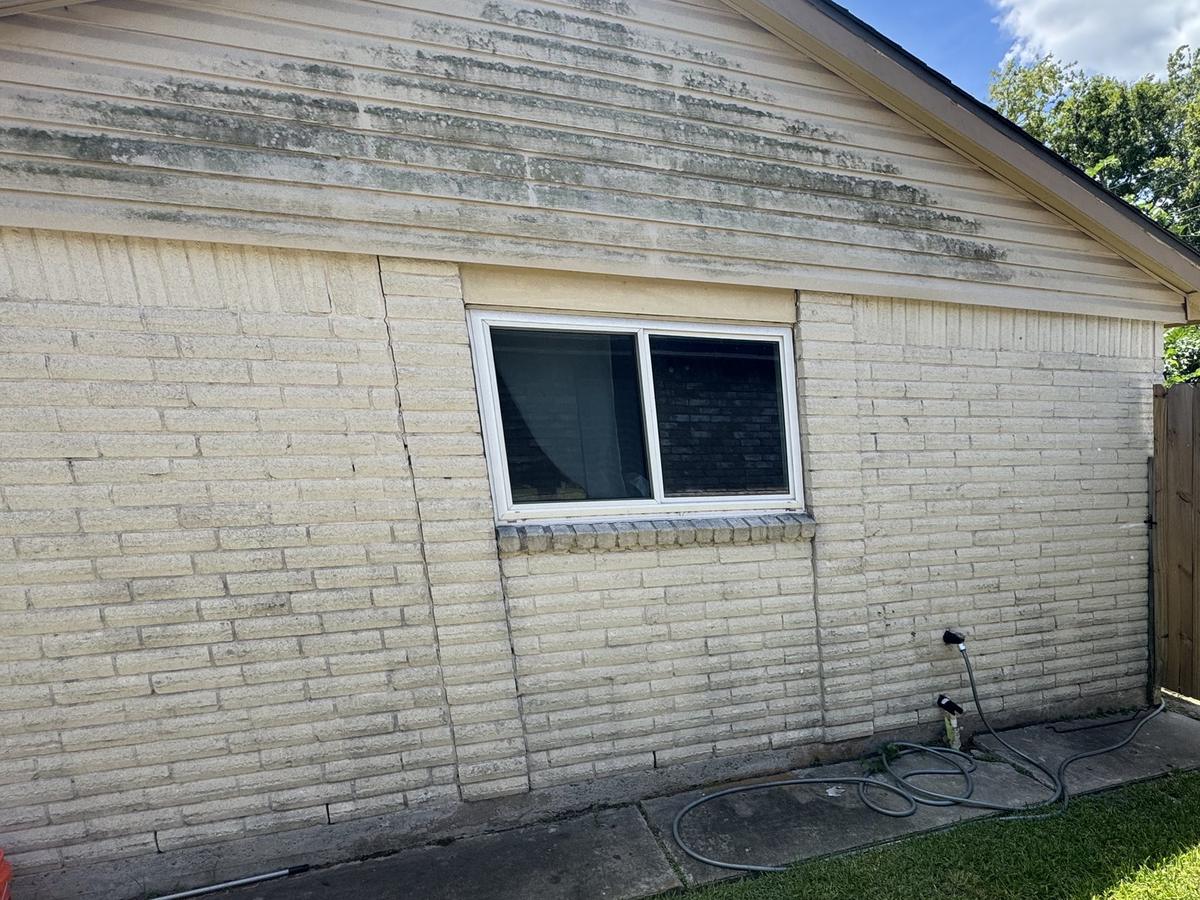
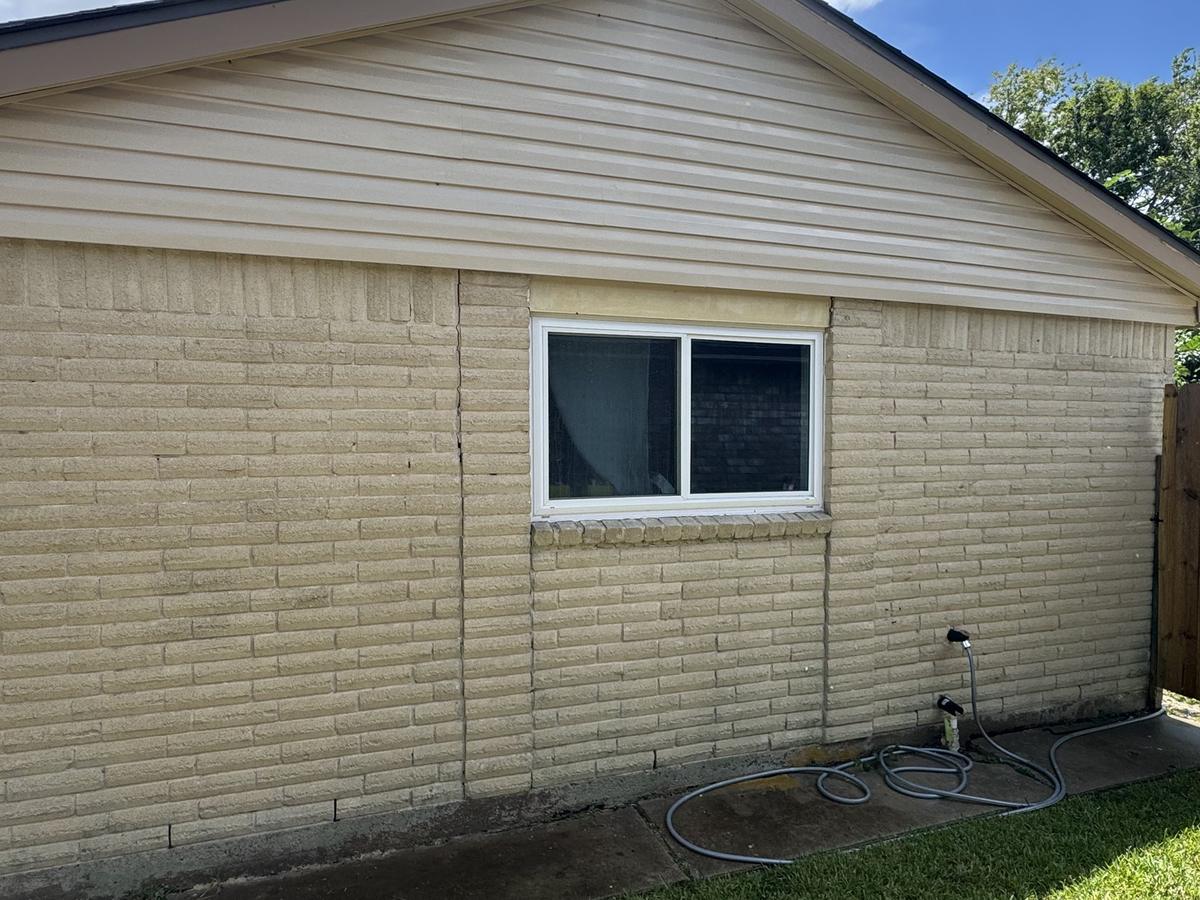
For typical washing intervals in our climate, see how often to wash your house on the Gulf Coast.
Quick answers
Why does mildew come back after pressure washing?
Mildew is a fungus that grows thin threads called hyphae into the texture and pores of a surface. Blasting removes the visible growth on top, but threads and spores can remain, and new spores keep landing from the air. When the surface is damp again, growth returns.
What are hyphae?
Hyphae are thin, tube-like threads that make up the body of a fungus. Cornell Cooperative Extension describes them branching across and penetrating the material a fungus grows on.
Can any cleaning keep mildew away permanently?
No. Fungal spores are always in outdoor air, and the USDA Forest Service notes that mildew will return if the growth conditions remain the same. Sun, airflow and keeping surfaces dry make the biggest difference to how quickly it comes back.
What does a soft wash solution do to mildew?
A soft wash solution contains sodium hypochlorite, which oxidizes and breaks down organic growth such as algae, mildew and lichen, including growth in the texture of the surface. It's given time to work and then rinsed off at low pressure.
What is lichen?
Lichen is a partnership between a fungus and an alga. The USDA Forest Service explains that lichens attach with fungal filaments called rhizines, and crusty types press tightly against surfaces like rock and roof shingles.
Sources
- Mildew and Mildew Control for Wood Surfaces, USDA Forest Service. https://research.fs.usda.gov/download/treesearch/5675.pdf
- Mold Information Sheet, Cornell Cooperative Extension. https://ccetompkins.org/resources/mold-fact-sheet
- A Brief Guide to Mold, Moisture and Your Home, U.S. Environmental Protection Agency. https://www.epa.gov/mold/brief-guide-mold-moisture-and-your-home
- Lichen Biology, USDA Forest Service. https://www.fs.usda.gov/wildflowers/beauty/lichens/biology.shtml
- Algae Discoloration of Roofs, Asphalt Roofing Manufacturers Association (ARMA). https://www.asphaltroofing.org/algae-discoloration-of-roofs/
- Algae & Moss Prevention and Cleaning for Asphalt Roofing Systems, Asphalt Roofing Manufacturers Association (ARMA). https://www.asphaltroofing.org/algae-moss-prevention-cleaning-asphalt-roofing-systems/
- Can You Pressure-Wash It?, Consumer Reports. https://www.consumerreports.org/home-garden/pressure-washers/surfaces-safe-to-clean-with-a-pressure-washer-a5445180933/
Links checked October 19, 2026. This page is general information, not a substitute for your manufacturer's instructions or a product label.