
The short version
- Windows: the window industry says never to pressure wash windows, doors or skylights. High pressure can dislodge seals and gaskets and push water inside.
- Screens: manufacturers recommend gentle cleaning with a soft brush and mild soap, not a pressure stream.
- Paint: a pressure washer can damage paint, and on homes built before 1978, loosened paint may contain lead.
Windows: seals, gaskets and water inside the wall
A window isn't a solid sheet of glass in a hole. The glass is held in by seals and gaskets, and the frame has small weep holes that let water drain back out. A high-pressure stream works against all of it.
The Fenestration and Glazing Industry Alliance (FGIA), the window and door industry's standards group, tells homeowners: never use a pressure washer or high-pressure sprayer to wash or rinse windows, doors or skylights, because it can dislodge seals and gaskets and damage frame components. It even advises caution with a garden hose, since high water pressure can lead to water getting into the home, and it asks that weep holes be kept clear so water can drain (FGIA).
Window makers agree. Andersen says pressure washing is not advised because it may damage parts of the window (Andersen). Consumer Reports adds a general rule for the whole house: don't spray directly into gaps around doors and windows (Consumer Reports).
Screens: thin mesh, fine frames
Insect screens are a thin mesh stretched in a light frame. Manufacturers treat them gently. FGIA recommends vacuuming screens with a brush attachment, or removing them and washing them on a flat surface with mild soap, water and a soft brush (FGIA). Andersen also says to remove screens and wash them with a soft-bristle brush and mild soapy water (Andersen). A pressure stream concentrated on that mesh is the opposite of gentle.
Paint and finishes
Consumer Reports warns that a pressure washer's stream can damage paint (Consumer Reports). Paint that's already peeling or loose is especially likely to come off. Manufacturers of painted siding set strict limits. James Hardie, for example, recommends a hose and soft brush for its fiber cement siding, and if a pressure washer is used, a wide fan tip at least 6 feet away and under 1,500 PSI (James Hardie).
Built before 1978? Consumer Reports advises having exterior paint on older homes tested by an EPA-licensed lead specialist before washing. Lead paint knocked loose can settle permanently in the soil, where children can pick it up (Consumer Reports).
Siding seams and trim
Water aimed the wrong way is its own kind of damage. Georgia-Pacific says to hold the wand straight at eye level and never aim it upward, because water can collect behind vinyl siding, then leak and streak or stay there and cause decay (Georgia-Pacific). The same goes for the joints around trim, light fixtures and outlets.
How a careful house wash protects them
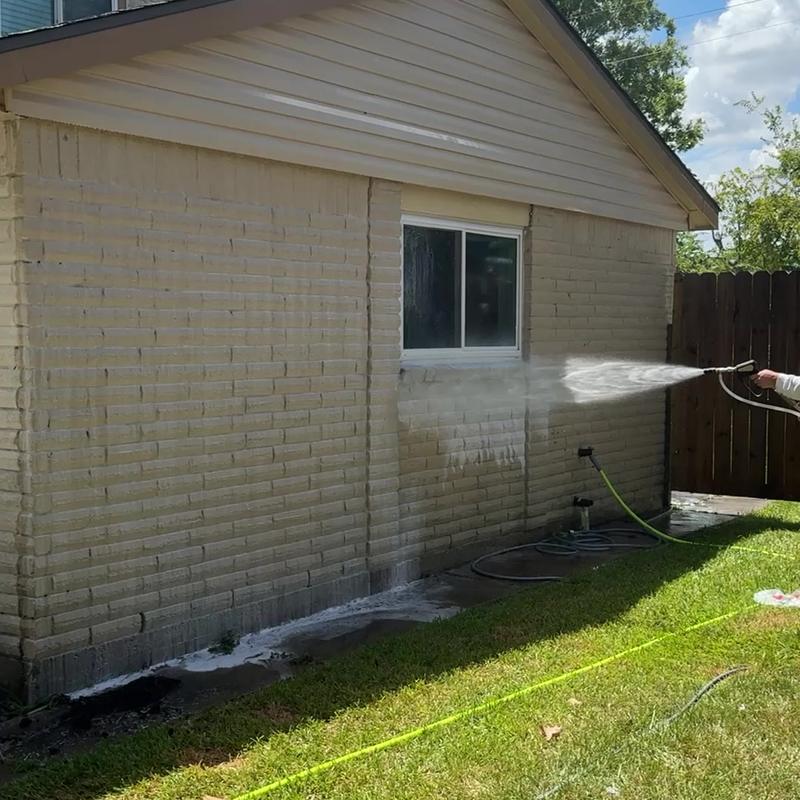
This is a big reason house washing is done as a soft wash: a cleaning solution at low pressure does the cleaning, and the rinse is gentle. There's no need to aim a strong stream at the glass, the screens or the paint. Close your windows before any wash, and tell your cleaner about any windows with failed seals, torn screens or peeling paint so they can be avoided. Our house wash checklist covers the rest.
Quick answers
Can you pressure wash windows?
The window industry says no. FGIA advises never using a pressure washer or high-pressure sprayer on windows, doors or skylights, because it can dislodge seals and gaskets and damage frame components, and high water pressure can push water into the home.
Will pressure washing damage window screens?
It can. Screens are thin mesh in a light frame, and manufacturers recommend gentle cleaning: vacuuming with a brush attachment or washing with mild soap, water and a soft brush.
Can pressure washing strip paint?
Yes. Consumer Reports warns that a pressure washer's stream can damage paint, and loose or peeling paint will come off under pressure. On homes built before 1978, have the paint tested for lead before washing.
How is a house washed without damaging windows?
With a soft wash: a cleaning solution at low pressure does the cleaning, followed by a gentle rinse, so there's no need to aim a strong stream at glass, screens or paint. Closing windows beforehand helps too.
Sources
- Caring for Your Windows, Doors & Skylights, Fenestration and Glazing Industry Alliance (FGIA). https://fgiaonline.org/resources/homeowner-resources/caring-for-your-windows-doors-skylights/
- How to Clean Windows Like a Pro, Andersen Windows. https://www.andersenwindows.com/ideas-and-inspiration/blog/tips/how-to-clean-windows
- Can You Pressure-Wash It?, Consumer Reports. https://www.consumerreports.org/home-garden/pressure-washers/surfaces-safe-to-clean-with-a-pressure-washer-a5445180933/
- Care and Maintenance, Georgia-Pacific Vinyl Siding. https://www.gpvinylsiding.com/support/care-and-maintenance/
- Siding Cleaning and Maintenance (Technical Bulletin), James Hardie. https://assets.ctfassets.net/dzi2asncd44t/1mcW7pxuTmKq1nWLOgTRbW/40f30c33fe5a8f9b9ea5ffdbffae86ae/20-james-hardie-siding-cleaning-and-maintenance.pdf
Links checked October 19, 2026. This page is general information, not a substitute for your manufacturer's instructions or a product label.