
The short version
- Concrete takes pressure well, but too much, too close, or too soon after it's poured can etch it or leave lines.
- Wood is easy to nick, etch and fuzz. Use low pressure, a wide tip, and follow the grain.
- Siding rules vary by manufacturer. Some allow limited pressure; some discourage it entirely.
- Roofs should never be pressure washed.
Consumer Reports puts it simply: a pressure washer is perfect for some jobs and too strong for others. The stream can damage paint, nick or etch wood, and even etch certain types of stone (Consumer Reports). The trade association for concrete masonry adds that high-pressure equipment can be very effective, but when improperly applied it can cause severe damage (CMHA).
Concrete: etching, lines and new slabs
Concrete driveways and walks can handle a powerful cleaning (Consumer Reports), but there are limits:
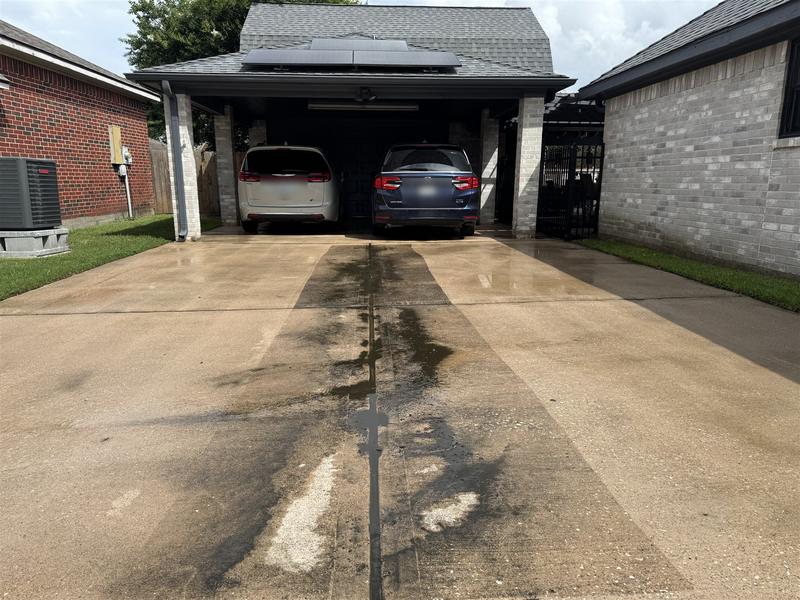
- Too much pressure, too close. Concrete Network advises keeping pressure under 3,000 PSI to avoid etching or surface damage (Concrete Network). A narrow tip held close in one spot is the usual culprit behind etched marks.
- Lines and stripes. A handheld wand held at changing distances can clean unevenly and leave visible lines. A rotary surface cleaner keeps its nozzles at a fixed distance from the concrete for a balanced, even pattern (Mi-T-M).
- New concrete. New concrete typically takes 28 days to fully cure (Concrete Network). If your slab is brand-new, ask the installer before anyone pressure washes it.
Wood decks and fences: nicks, gouges and fuzz
Wood is softer than it looks. Consumer Reports notes that pressure-treated decking, usually Southern yellow pine, is generally fine if you don't hold the nozzle too close. It recommends starting with a low-pressure nozzle in a hidden spot, working along the length of the board with the grain, and it suggests about 800 to 1,000 PSI for decks (Consumer Reports). Hardwoods like ipe handle more; composite decking may only need a scrub and rinse, so check its warranty before pressure washing.
Once wood fibers are nicked or torn up, rinsing won't put them back, and boards may need sanding or replacement. See our guide to cleaning wood fences.
Vinyl siding: water behind the panels
A key risk with vinyl is water getting behind the siding. Georgia-Pacific says to hold the wand straight at eye level and never aim it upward, because water can collect behind the siding, then leak and streak or stay there and cause decay. It allows 1,500 to 2,400 PSI with a 40-degree tip on its own siding (Georgia-Pacific). Other makers are stricter: ProVia says pressure washing its vinyl siding is strongly discouraged (ProVia).
Fiber cement, aluminum, shingle siding and old paint
- Fiber cement (like Hardie): James Hardie says a pressure washer can damage its siding's surface and recommends a garden hose and soft brush instead (James Hardie FAQ). If a pressure washer is used, it calls for a wide fan tip at least 6 feet from the wall and under 1,500 PSI, and it notes that damage from improper cleaning may not be covered by its warranty (James Hardie).
- Aluminum siding can dent, so start at the lowest pressure with a broad nozzle (Consumer Reports).
- Shingle siding shouldn't be pressure washed; the pressure can knock shingles loose (Consumer Reports).
- Doors, windows and gaps: don't spray directly into gaps around doors and windows or under lap joints (Consumer Reports).
Built before 1978? Consumer Reports advises having exterior paint on older homes tested by an EPA-licensed lead specialist before washing. Lead paint knocked loose can settle permanently in the soil, where children can pick it up (Consumer Reports).
Roofs: never
The roofing industry says not to use a power washer, brush or broom on asphalt shingles at all (ARMA). Read more in black streaks on your roof.
When soft washing is the better choice
For siding, painted surfaces, stucco and roofs, a soft wash (low pressure plus a cleaning solution, then a gentle rinse) cleans the mildew and algae without relying on force. Pressure is best saved for hard surfaces like concrete. Our soft wash vs pressure wash guide covers which surface gets which, and GPM vs PSI explains why flow, not raw pressure, does much of the work.
Personal safety: Consumer Reports recommends against using a 0-degree (red) nozzle at all, because the concentrated stream can pierce surfaces, including protective boots. A 15-degree tip is enough for detail work. Wear hearing protection, safety goggles, protective footwear and gloves, and don't use a pressure washer from a ladder (Consumer Reports).
How ACE matches the method to the surface
We use a 3,000 PSI, 5.5 GPM pressure washer with a 20-inch surface cleaner for concrete, and a low-pressure X-Jet soft wash for siding and shingle roofs. If you're not sure what your siding is, or whether your concrete is new, tell us when you ask for a quote.
Quick answers
Can pressure washing damage concrete?
It can. Concrete handles pressure well, but too much pressure, a narrow tip held close or washing before new concrete has cured can etch the surface or leave lines. Concrete Network suggests staying under 3,000 PSI, and new concrete typically takes 28 days to fully cure.
Is it safe to pressure wash vinyl siding?
Sometimes, within the siding maker's limits. Georgia-Pacific, for example, allows 1,500 to 2,400 PSI with a 40-degree tip held straight at eye level, while ProVia strongly discourages pressure washing its siding. Aiming upward can push water behind the panels.
Can a pressure washer damage a wood deck or fence?
Yes. Consumer Reports notes that the stream can nick or etch wood. Use a low-pressure setting on soft woods like Southern yellow pine, test a hidden spot first and work along the grain.
Which pressure washer nozzle should I never use?
Consumer Reports recommends against the red 0-degree nozzle because the concentrated stream can pierce surfaces, including protective boots. A 15-degree tip is enough for detail work.
Should I pressure wash a house built before 1978?
Have the paint tested for lead first. Consumer Reports warns that knocking old lead paint loose can leave it in the soil around your home.
Sources
- Can You Pressure-Wash It?, Consumer Reports. https://www.consumerreports.org/home-garden/pressure-washers/surfaces-safe-to-clean-with-a-pressure-washer-a5445180933/
- New Concrete? Common Care Questions Answered, Concrete Network. https://www.concretenetwork.com/concrete/new-faqs.html
- Removal of Stains From Concrete Masonry (TEK 08-02A), Concrete Masonry & Hardscapes Association. https://www.cmha.org/resource/tek-08-02a/
- Which is more important PSI or GPM? / Rotary Surface Cleaners (Pressure Washer FAQ), Mi-T-M Corporation. https://www.mitm.com/consumer/pressure-washers/
- Care and Maintenance, Georgia-Pacific Vinyl Siding. https://www.gpvinylsiding.com/support/care-and-maintenance/
- Siding Cleaning and Maintenance, ProVia. https://www.provia.com/siding/cleaning-maintenance/
- Frequently Asked Questions: Can you pressure wash fiber cement board siding?, James Hardie. https://www.jameshardie.com/faq/
- Siding Cleaning and Maintenance (Technical Bulletin), James Hardie. https://assets.ctfassets.net/dzi2asncd44t/1mcW7pxuTmKq1nWLOgTRbW/40f30c33fe5a8f9b9ea5ffdbffae86ae/20-james-hardie-siding-cleaning-and-maintenance.pdf
- Algae Discoloration of Roofs, Asphalt Roofing Manufacturers Association (ARMA). https://www.asphaltroofing.org/algae-discoloration-of-roofs/
Links checked October 19, 2026. This page is general information, not a substitute for your manufacturer's instructions or a product label.